


Is the Columbia River Open for Salmon Fishing Right Now? (2026 Season Guide)
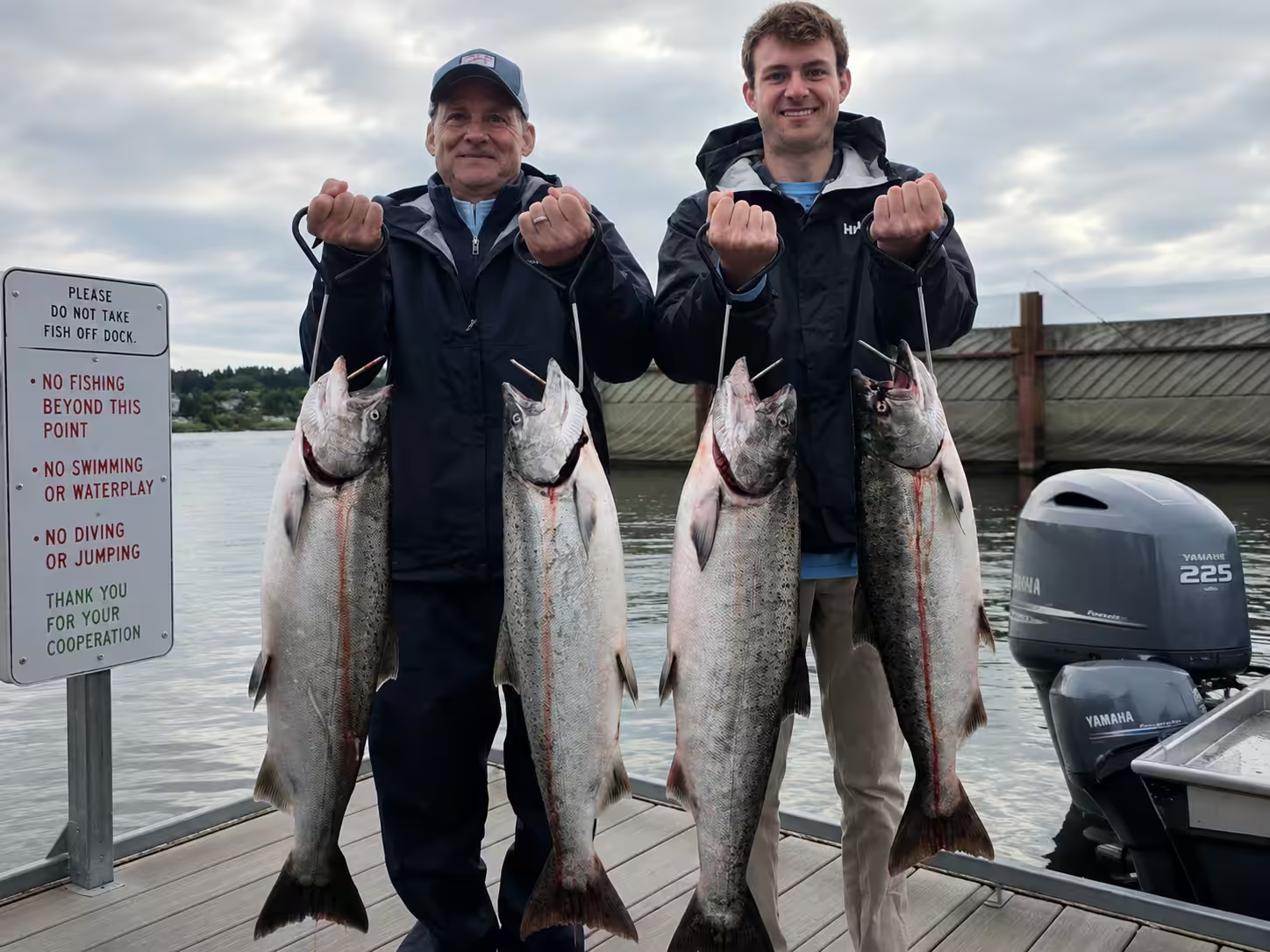
Navigating the massive waters of the Pacific Northwest requires up-to-the-minute knowledge of fish management policies. If you are an angler staring at your gear and wondering if the Columbia River is open for salmon fishing right now, the simple answer is that it depends entirely on the date, your precise location on the river, and the specific salmon run you are targeting.
Because local fish and wildlife agencies manage these waters using complex data models, quotas fill up fast, and emergency updates happen with little warning. This guide aggregates the latest regulatory data to give you clear answers on where you can cast your line today.
If you are asking, “Is the Columbia River open for salmon fishing right now?”, the safest answer is this: some fishing is open, but the exact species, retention rules, daily limits, and river sections change quickly. That is why checking official WDFW and ODFW updates before every trip is essential.
At Columbia River Fishing Adventures, we help anglers enjoy the river while staying aware of changing seasons, boundaries, and daily limits. Oregon’s best salmon season starts August 1, and now is the time to reserve your trip with Columbia River Fishing Adventures before prime dates fill up.
Why Columbia River Salmon Rules Change So Often
The Columbia River is one of the most regulated salmon fisheries in the Pacific Northwest. That is not because fishing is poor. It is because the river supports multiple salmon runs, wild and hatchery fish, tribal fisheries, recreational fisheries, commercial fisheries, and protected stocks.
Oregon and Washington fishery managers finalize preseason plans, but they also adjust rules during the season. ODFW explains that 2026 summer and fall recreational salmon and steelhead fisheries were planned jointly by Oregon and Washington fishery managers, with added protections for ESA-listed lower Columbia River fall Chinook and summer steelhead.
That means a section that is open one week may have a new limit, new closure, or different retention rule the next week.
Common reasons rules change include:
- Run-size updates
- Harvest quotas being reached
- Warm water conditions
- Protection for wild salmon or steelhead
- Treaty fishing agreements
- Emergency rule changes
- Area-specific conservation closures
This is why a simple yes or no answer does not always tell the full story.
Current Status of Columbia River Salmon Fishing
As of July 2026, the summer salmon season is underway, but management zones have distinct rule differences. Joint state action from local authorities has shaped the mid-summer angling structure to balance conservation goals with recreational opportunity.
Retention Status Below Priest Rapids Dam
Anglers fishing the mainstem downstream of Priest Rapids Dam must note that adult summer Chinook retention is currently closed. However, the retention of hatchery jack Chinook and hatchery steelhead remains open from the Astoria-Megler Bridge upstream to the Highway 395 Bridge in Pasco, Washington.
Sockeye Harvest Adjustments
Sockeye management saw a brief retention window earlier in the summer, closing in early July to ensure upriver escapement targets are achieved. A seasonal angling closure is also in effect near the mouth of Tanner Creek to protect migrating fish bound for local hatchery reintroduction efforts.
Regulations shift rapidly based on weekly counts at the dam passage facilities. Before you launch your boat, ensuring compliance with daily limit shifts and boundary lines is your top priority.
Booking a guided trip with Columbia River Fishing Adventures ensures compliance with daily limit shifts and boundary lines automatically, as our experienced captains track these emergency rule changes every single day.
Is the Columbia River Open for Salmon Fishing Right Now?
For July 2026, the Columbia River summer season runs from June 16 through July 31. The official 2026 regulations state that hatchery jack Chinook and hatchery steelhead retention is allowed in summer from the Astoria-Megler Bridge upstream to the Oregon/Washington border upstream of McNary Dam, but adult Chinook retention is prohibited. Sockeye retention was scheduled only for June 23 through July 5.
So, if your question is “is the Columbia River open for salmon fishing right now?”, here is the practical breakdown:
Open in some form: Yes, for certain legal opportunities such as hatchery jack Chinook during summer.
Adult Chinook retention: Closed during summer in the listed mainstem Columbia areas.
Sockeye retention: Scheduled June 23 through July 5 only.
Fall Chinook and coho: Scheduled to begin August 1, with rules varying by river section.
Steelhead rules: Conservative restrictions are in place because of low expected summer steelhead returns.
Before fishing, always confirm the current rule for your exact stretch of river.
Columbia River Salmon Runs Explained
Understanding the major salmon runs helps answer the question, “is the Columbia River open for salmon fishing right now?” The river does not have one simple salmon season. It has several distinct windows, each with different species, areas, and rules.
Spring Chinook
Spring Chinook are one of the most prized salmon runs on the Columbia River. These fish are known for their rich flavor, strong fights, and early-season excitement. The spring season typically draws serious anglers who want a chance at fresh Chinook before the summer and fall crowds arrive.
Spring Chinook rules can be especially sensitive because managers track run strength closely. Seasons may open, close, or reopen depending on updated counts and harvest impacts.
For anglers, spring Chinook fishing is often about timing. A few good days can make the season memorable, but waiting too long can mean missing the best window.
Summer Chinook
Summer Chinook fishing usually falls in June and July. For 2026, ODFW reported a summer Chinook forecast of 40,700 adults, and adult Chinook retention is closed in summer season fisheries downstream of Priest Rapids Dam due to the low forecast and allocation guidance.
This is why July can be confusing for anglers. The river may be open for certain fishing opportunities, but not necessarily for keeping adult Chinook.
During the 2026 summer, the main opportunity is more limited. Hatchery jack Chinook may be retained in the listed open area, but adult Chinook retention is prohibited. Sockeye retention was allowed only during the June 23 through July 5 window.
Fall Chinook, Including Upriver Brights
Fall Chinook are a major reason anglers watch the Columbia River closely in August and September. These fish include the well-known Upriver Brights, which draw attention from local and visiting anglers every year.
For 2026, ODFW reported an adult fall Chinook forecast of 636,500 fish, lower than the previous year’s actual return of 685,512 adult fish. ODFW also noted that fall-season fisheries are primarily limited by expected harvest of upriver bright fall Chinook, which is subject to catch-sharing agreements with Columbia River treaty tribes.
Fall Chinook retention starts August 1 in many areas, but rules vary by section. For example, the 2026 preseason regulations include different date windows for Buoy 10, West Puget Island, Warrior Rock, Bonneville Dam, The Dalles Dam, and upstream areas. Some sections allow Chinook retention during certain dates, then switch to coho-only or close to salmon and steelhead angling later in September.
This is precisely why guided trips are helpful. Boundary lines matter. Dates matter. Fish markings matter. A small mistake can put an angler out of compliance.
Coho Salmon
Coho become a bigger part of the Columbia River conversation as fall develops. For 2026, the Columbia River coho forecast is 358,700 adults, lower than the previous year’s return of 471,411 fish.
Coho rules often differ from Chinook rules. In some areas, hatchery coho retention may continue after Chinook retention ends. In other areas, limited unmarked coho retention may be allowed. ODFW noted that 2026 regulations include limited retention of unmarked coho in some areas, along with mark-selective rules during part of the Buoy 10 fishery.
For anglers, that means identification is important. You need to know whether the fish is Chinook or coho, hatchery or wild, adult or jack, and whether that fish is legal in your exact location.
Official Columbia River Salmon Regulation Links
Use these official resources before heading out:
Oregon Department of Fish and Wildlife
ODFW’s Columbia Zone fishing report directs anglers to check regulation updates for salmon, steelhead, shad, and sturgeon, including in-season changes.
Washington Department of Fish and Wildlife
WDFW recommends anglers read the annual fishing pamphlet, check emergency rule changes, and use the Fish Washington mobile app for up-to-date regulations.
WDFW Emergency Rule Updates
WDFW’s emergency rule page lists current fishing rule changes and allows anglers to narrow updates by water body, species, location, and date.
These sources should be checked every time you fish because the Columbia River is managed in-season.
Key Boundaries and Zones for Anglers
The river is divided into distinct sections, and a zone that is wide open for harvest might be completely closed just a mile upstream. Knowing your exact coordinates is critical.
Buoy 10 Area
This zone runs from the mouth of the river at the Pacific Ocean up to the Astoria-Megler Bridge. It is the premier arena for the early fall salmon season. Mark-selective rules are common here, requiring quick identification of hatchery-clipped fins before bringing a fish into your cooler.
Lower Columbia Mainstem
This section covers the vast stretch of water from the Astoria-Megler Bridge up to Bonneville Dam. It features numerous sandbars, deep shipping channels, and islands where migrating salmon rest. Regulations here often change to protect specific wild stocks heading into lower river tributaries.
Upriver Pools
Above Bonneville Dam, the river turns into a series of massive reservoirs, including the Bonneville Pool, The Dalles Pool, and the John Day Pool. Fishing in these pools requires a strong understanding of dam-specific boundaries, closed sanctuary spaces around creek mouths, and tribal fishing zones.
Essential Gear and Rules for Columbia River Salmon
Success on this big river requires specialized tackle and strict adherence to conservation-minded gear rules. Local authorities enforce these technical parameters strictly.
Mandatory Gear Rules
- Barbless Hooks: You must use single-point barbless hooks when fishing for salmon or steelhead anywhere on the mainstem downstream of the Highway 395 Bridge.
- Fewer Mutilations: You cannot possess a fish in the field that is altered so that its species, size, or fin clips cannot be easily determined by an enforcement officer.
- No Fin-Clipped Violations: Keep a precise record of your catch immediately on your state-issued harvest record card or your verified mobile application.
Top Salmon Fishing Techniques
- Trolling Multi-Bladed Flashers: Pulling a dynamic plastic flasher ahead of a herring bait or a custom spinner is the dominant method in the lower river and the estuary.
- Anchor Fishing with Kwikfish: Sitting on anchor in a known travel lane and letting the river current work a heavy-action plugging lure can tempt giant Chinook.
- Hover Fishing: Dropping cured salmon roe directly into deep river depressions where fish gather during warm-water periods.
Book Your Adventure on the Columbia River
Trying to keep track of changing quotas, barbless hook variations, moving boundary lines, and daily bag limits can easily take the fun out of your morning on the water. If you want to skip the confusion and focus entirely on fighting chrome-bright fish, booking a professional charter is the smartest path forward.
When you step aboard with Columbia River Fishing Adventures, you are fishing with seasoned captains who live and breathe these waters. We handle all the technical details, provide top-tier rods and custom tackle, and ensure your trip perfectly matches the current legal openings. Oregon’s Best salmon season starts August 1, and now is the time to reserve your trip.
Our peak calendar dates fill up rapidly as the massive fall run approaches. Contact Buddy or Travis of Columbia River Fishing Adventures today to secure your seats on the boat and prepare for an unforgettable day on the water.